Sunday, February 10, 2013


It's time for another round of "Youthful Yogis Q & A"!!!

...you heard that right, Youthful Yogis, it's time for another round of "Youthful Yogis Q & A", also known as:  "There are a bunch of things I really don't understand and can you just please explain stuff to me so that I know what's going on in yoga class?"


"I have questions!!!"

As you may remember, our "Q & A" sessions work like this: I'll share with you some frequently asked yoga-related questions. See if you can answer each question on your own; afterwards, I'll share my responses with you and we can find out if our ideas match.

Let's get started!

1) Question:  "Sometimes I really feel like standing on my head. Is it OK to do this while the teacher is showing the class another pose...like Tree Pose, for example?"


2) Question: "Why can't I talk with my friends during yoga class?"


3) Question: "I stubbed my toe in gymnastics and it's still a little sore. Do I have to do every single pose that the teacher is showing today...even if it kind-of-sort-of-hurts?"


4) Question: "Come to think of it, I have a lot of stuff going on right now: there's my sore toe, my loose tooth, the fingernail I cut too short, my haircut which I hate and the second helping of chocolate pudding that I scarfed down at lunchtime...I think I should fill my yoga teacher in on all of this, don't you?"

"This is something I know my yoga teacher wants to see!"


                                                                          Answers

1) Headstand when the teacher is instructing Tree Pose: I have to admit, this first question almost makes me want to run out of the room screaming....


Seriously, Youthful Yogis, it is important to listen to your instructor in a yoga class. Teachers spend a lot of time thinking about something called "sequencing"....that's a word that means the order, or sequence, of poses that we practice.

Tree Pose and Headstand are very different poses...take a look:


Most yoga instructors offer gentle poses to warm up with and save super challenging postures for the middle or later part of a practice. You would never start a class with headstand! Headstand is definitely challenging and some people should not do it at all. If you have had eye surgery or neck pain, for example, you would definitely skip turning yourself upside down.


So, to answer your question...you should not practice headstand if your teacher is showing the class how to do Tree Pose! It's not safe, it will make your instructor uncomfortable, and the rest of the class will think you have wax in your ears and can't hear well!


Now that we have that out of the way, let's move on...

2) Talking with friends during class: This question is a little bit like the one I just answered in that both have to do with listening...did you hear what I just said?!

As it turns out, listening is very important in yoga. First of all, you need to listen in order to understand the teacher's instructions. 


"I'm pretty sure the teacher said to put my hands over my head...if not,  I'll feel a little funny!"

Secondly, you need to listen in order to know what your own body is telling you. The idea that our bodies might have something to say is kind of strange...but it's true! Our bodies let us know if we are tired, off balance, full of energy etc. But we have to pay attention in order to hear this information and that's hard to do if we are busy talking! 

Practicing yoga is all about paying attention: "tuning in" so that we become more self-aware, both on and off of our yoga mats. 


"I am so tuning in right now...can you tell?!"

Finally, people do yoga to quiet their minds and to relax their bodies. It may feel relaxing for one person to chatter with their friends, but I can tell you that someone else's chatter is not relaxing to other people!  


Please, Youthful Yogis, find time to talk with your friends before or after yoga class. If you are having fun doing yoga at home with a friend, it's definitely OK to talk. But when you are in a group, it's important to take other people into consideration!

3)  Yoga with a sore toe: You should never do a yoga pose if it hurts! If you have a serious injury, it's best to take a break from yoga class all together: try doing some relaxing stretches and calming work with the breath at home  instead.

If you have some minor discomfort, it's usually Ok to participate in a class...you might like to tell the teacher what's up so he or she can offer suggestions: with a stubbed toe, for example, you might skip certain poses that involve curling your toes under, like the two I'm showing here:


"I am so totally happy that my toes don't hurt!"


4)  Loose teeth, bad haircuts and what you ate for dessert: Please don't take this personally, Youthful Yogis, but yoga teachers usually do not have time to hear about every little thing that is happening to every single person in their class! If you plan on skipping certain poses due to a minor injury (like the stubbed toe situation mentioned above), it's good to let the teacher know. But honestly...fingernails, full stomachs and bad haircuts may be more information than your teacher can handle!


"Can I still do yoga with  a haircut that looks like this?!"


That concludes today's session of "Youthful Yogis Q & A"....how'd you do?

There's lots more to talk about, and maybe some of today's information has even raised new questions in your brain....


Feel free to email me at youthfulyogis@gmail.com   I'll enjoy hearing from you and will try to get your questions answered in our next session of "Youthful Yogis Q & A".

Have a great week, Youthful Yogis. Try not to eat too much chocolate pudding at one sitting and don't worry if you get a weird haircut...it'll always grow back!


"Truthfully, I just asked for a little to be taken off the sides!"

See you again soon,

Namaste


Friday, January 18, 2013


Hey Youthful Yogis!   
I was drinking a glass of milk today and, guess what? I got to thinking about cows!

Cows, as you know, are pretty great. They are peaceful vegetarians who have been providing us with nourishment for centuries. And here's an interesting fact...in India, cows are considered to be sacred. That's right! They symbolize the earth and are much appreciated for their gentle nature. Throughout history, cows have provided the Indian people with an important food source (milk, butter and curds) and have also been used to till the fields. Cow dung is a source of fuel and a fertilizer for crops as well...and I did not just make that up!

There are 26 breeds of cow in India, and in many cities cows are allowed to roam happily in the streets:


"Beep, beep!"
"I call this my "happy place"


Youthful Yogis will remember that in Hindu mythology, Lord Krishna is said to have been born into a family of cowherds...that's why we often see pictures of Krishna with cows and a flute:


Lord Krishna

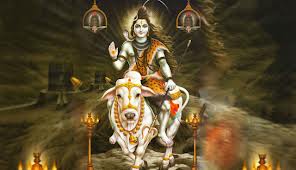
And speaking of Lords...one of the most powerful gods in Hindu mythology is Shiva, said to be the responsible for death and destruction, which in turn leads to creation and rebirth.

Lord Shiva's style is hard to beat...check it out:


"Honestly, I just threw this little outfit together at the last minute...!"


Here is a list of Lord Shiva's "attributes" (objects associated with or belonging to him.)  Can you find  these attributes in the picture above?
* a Trident
*a crescent moon
* a "third eye"
* a tiger skin
*some serpents
*a drum
*Nandi, the bull


Nandi

Who doesn't love Nandi?!! He is considered to be the "vehicle" or "mount" of Shiva, meaning that the two are often seen together:


"I'm loving my ride...and don't even get me started on my tiger skin cape!" 

There is a town in South India called Mahabalipuram; it's  known for it's sculptures and temples carved out of rock.


 If you ever make it to Mahabalipuram, here are some amazing things that you might see:

"Krishna's Butterball" (I did not make that name up!)


Shore Temple, carved from stone


Nandi, larger than life!

I really hope to get back to Mahabalipuram someday to say hello to that larger than life Nandi...but in the meantime, it's time for a new yoga pose!  Can you guess what it's called?...."Cow Face Pose", of course!!

Cow Face pose, known as Gomukhasana in Sanskrit, is pretty tricky. If you do what we call the "traditional" version of the pose, your legs will look like this:

"OK, I admit it...I want to scream!"


For some people, sitting in either "easy pose", or "Hero pose" is better:


"easy pose"


"Hero"

Once you have found a comfortable seated position, you can try bringing your arms into place for the full "Cow Face" experience!


Not everyone can get their arms far enough back to hook their fingers, like the guy up above. In fact, most of us are a little tight in the shoulders, and lots of people are actually dealing with past injuries in this part of the body. So please move into this pose carefully, Youthful Yogis; keep your spine "long" (OK, what I really mean is...don't slouch!!) Relax your face and have fun. If your fingers don't touch behind your back, you can use a strap:


...or simply press the hands gently into your body so you get a great opening stretch. Cow Face pose is definitely a super stretch for the shoulders as well as for the upper back and chest. It also creates space for the lungs, so we can breathe more deeply...


This is what I'm talking about, People!

Have fun trying out Cow Face pose, Youthful Yogis. And, if you are like just about everybody else I know, one burning question will come to mind while you are doing the pose....Why Do They Call It Cow Face Pose???


"Why? Why? Why?!"

I'll share with you what I've figured out, Youthful Yogis...and feel free to tell me if you have another idea on the subject.

Here is Cow Face pose again:


"Everyone keeps telling me I need to put some meat on my bones!"


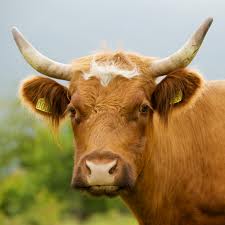
And here is a cow's face:


Now, take a look at this:


"OK, I am upside down...but try to ignore that and look at the shape my legs make." 

Get it? When we sit in Cow Face pose, our knees and thighs look like the face of a cow, and our shins look like the horns. Some people have a different take on this...they think the crossed legs look like a cow's face and the arms look like ears or horns.


...and did I mention you can also do a version of Cow Face pose on your back:


I hope that you will have fun experimenting with Gomukhasana, Youthful Yogis. As you practice the pose, try reflecting upon the gentle nature of cows all around the world: see if you can open to new possibilities as you stretch, release and breath.

And just in case all of this cow-talk hasn't inspired you yet...click on the word "MOO!" below to connect with a site that will definitely help you to channel your inner cow!  It's on YouTube, so ask an adult to make sure that's OK.


MOO!

It's time for me to grab another glass of milk and get on with my day, Youthful Yogis. Have a great week and I'll see you again soon!


Namaste


Wednesday, January 2, 2013


Happy New Year, Youthful Yogis!
I hope everyone has enjoyed a very wonderful holiday season. As we enter a brand new year, it's time to think of all the inspiring things we can do in 2013. Here are a few possibilities....

1) clean out a closet
2) cut down on chocolate
3) watch fewer episodes of Sponge Bob on Netflix
4) agree to eat brussel sprouts at least once a week


"Brussel sprouts? Never.....!!!

OK, Youthful Yogis, I admit it... my list of inspiring things to do in 2013 was kind of a joke. Mostly I just wanted to get your attention. Now I will tell you what you really might like.....
       
                                              A New Yoga Pose, of course!!!!

As you know, there are many, many yoga poses to choose from. We have already covered some poses that are energizing (headstand, plank pose, dancer pose) as well as a few that are relaxing (child's pose, legs up the wall, "magic carpet.")  But how about a pose that has a great story behind it?  That sounds like just what we need for 2013!

So here we go...once upon a time, long long ago, a little monkey thought that the sun was a ripe mango:  


When the monkey reached for the sun, which he thought was a mango, he was hit by a thunderbolt, called Vajra. This disfigured his face! Vayu, the deity of air, was very upset and began to go into hiding...taking all the air in the world with him! Of course something had to be done to improve the situation: the devas (a bunch of deities who somehow got mixed up in this whole affair) decided to do the monkey a huge favor, mostly in order to keep Vayu happy which would mean all living beings would have air to breath again.

Vayu, doing the air thing

Here is what the monkey, known as Hanuman, received from the gods: wisdom, courage, a long life, protection from fire, protection from water, happiness and contentment. As if all of this were not enough, the gods also bestowed Hanuman with the ability to change size. Seriously, he became a shape shifter!! I guess this made Vayu pretty happy because, just for good measure, he made it so that Hanuman could run and fly faster than the wind!

You're probably thinking that little Hanuman pranced off into the forest never to be heard from again and that this story of the funny-faced monkey god is complete. But no, Hanuman did not prance off into the forest: he actually became one of the most beloved deities in Hindu mythology, thanks to his physical strength, his power of devotion, and his desire to fight the forces of evil.


Hanuman...the kind of friend we'd all like to have!

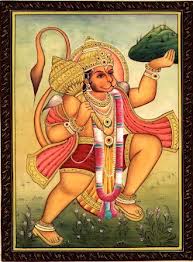
Let me tell you, Hanuman really put all of his abilities to good use! One story tells of how the monkey god was sent to the mountains to find a special herb, the only thing that could cure the wounds of Lakshmana, a hero who was wounded in battle. When Hanuman was unsure of which herb to pick, he made himself huge and--what else?--picked up an entire mountain to make sure he brought the correct medicine to the battlefield!

Not certain what plant to pick, Hanuman grabs the whole mountain!

Another famous story tells of how Sita, the wife of Rama, was imprisoned on an island. No one dared to cross the sea to save her...no one that is, except our friend Hanuman! He made himself huge, then leaped across the Indian mainland and over the water to the island where Sita was being held. A bunch of stuff happened but, long story short, Hanuman saved Sita, Rama won a big battle, songs were written about it and a yoga pose got its name. Honestly, Youthful Yogis, you were not expecting all of that, were you??!


Hanuman, getting ready to save Sita!

Now that we know what a brave and faithful character Hanuman was, let's take a look at the yoga pose named after him. It's known as Hanumanasana, and it's a very challenging posture inspired by the great leap that Hanuman made in order to save Sita.  Here is one artist's depiction of Hanuman crossing the ocean:


And here is what the pose, inspired by that ocean crossing, looks like:


Here is another example:


I know what you are thinking, Youthful Yogis...OUCH! But guess what? You can do what's called a "modified version" of the pose like the guy in the top part of the picture below:


Also, and most importantly, it is necessary to do quite a few "warm up" poses before making your way into any version of Hanumanasana. Here are a few poses to warm up with and, of course, you can add others if you like:

Downward Facing Dog


Down dog splits


Warrior Three


Hanumanasana is definitely a challenging pose; it stretches the hamstrings, thighs and groin (the area between the belly and the thigh, on either side of the body). It's also good for the internal organs!

Lovely!


Hanumanasana is a stretch in all senses of the word. It takes focus, courage, and a willingness to overcome obstacles and expand further than we may think possible...just as Hanuman did on his way to rescue Sita!

Are you ready to give Hanumanasana a try, Youthful Yogis? Remember to warm up first, and to listen to your body as you move carefully into the pose. By the way, there is one more part of the story that I meant to tell you...the gods gave Hanuman the gift of speed, agility and immortality, but they also made him unable to recognize his own abilities!  Hanuman had to be reminded by others of all that he was capable of, just as most of need encouragement at times to realize our true potential!


"Thanks for reminding me how great I am!"

It's been so much fun sharing the story of Hanuman with you today, Youthful Yogis. I hope the legend of the monkey god will inspire you as we move into the new year. As a final treat, I'd like to share a recording of "Hanuman Chalisa" with you; it's a heartfelt song (kirtan) based on the legend of Lord Hanuman and it is performed in what's known as a "call and response" style. The main singer is named Krishna Das and the recording is on YouTube, so make sure you get permission from an adult before you check it out. Just click on the words Hanuman Chalisa below and it will link you to the You Tube site...


Hanuman Chalisa

Happy New Year, Youthful Yogis. See you again soon!

Namaste